
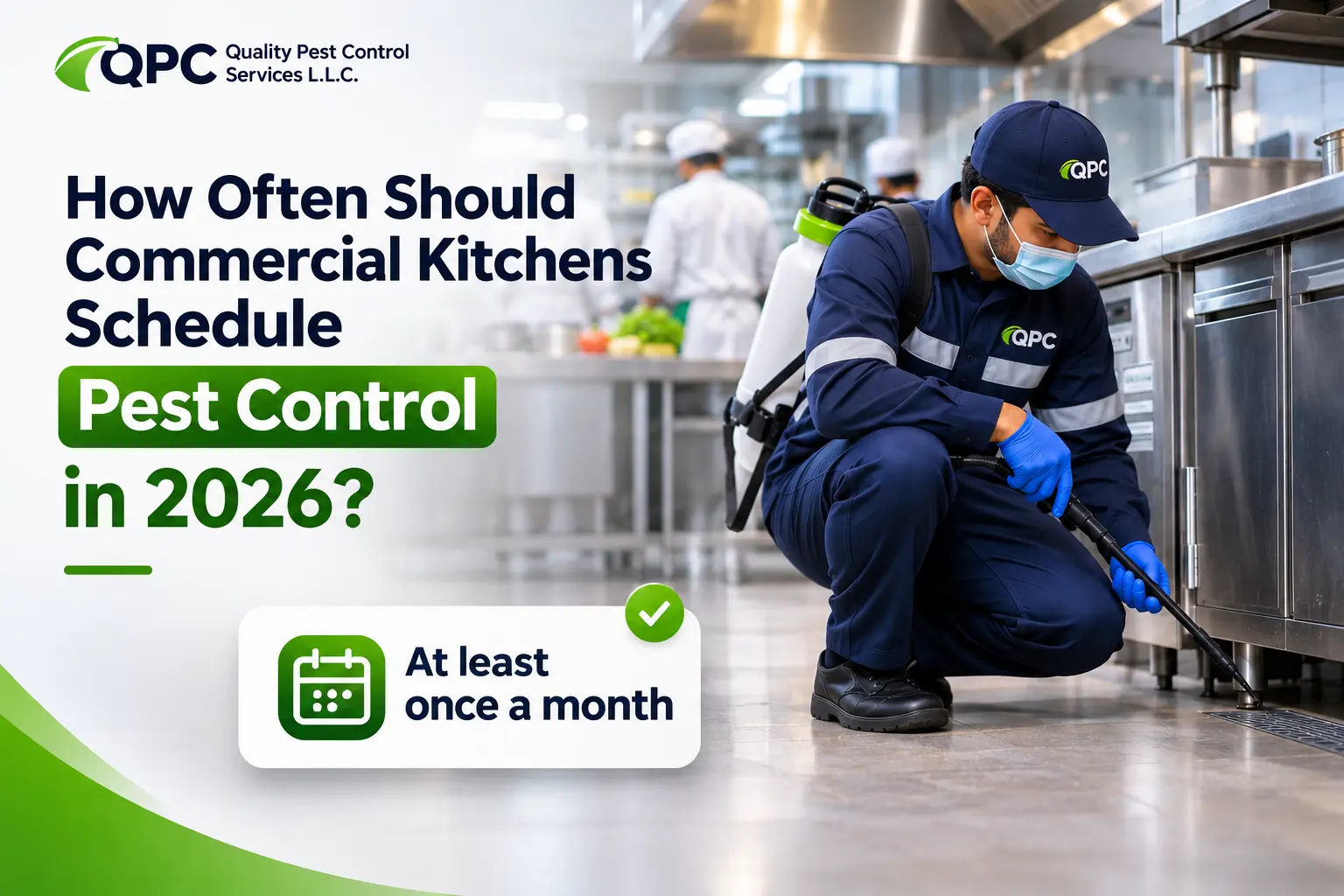
A monthly pest control visit is a sensible starting point for most commercial kitchens. But if your kitchen is more vulnerable to pests, you may need inspections and treatments every two weeks or more often. Staying on top of pest control helps restaurants, hotels and food businesses maintain a hygienic environment, prevent infestations and keep their reputation intact.
In the UAE, food businesses also need to comply with applicable local food safety requirements. It’s better to have a regular pest management schedule than wait until flies, cockroaches or rodents show up.
How Often Should Commercial Kitchens Have Pest Control?
Most commercial kitchens should arrange professional pest control every month. Kitchens with recurring infestations, heavy food preparation or frequent pest sightings may require fortnightly visits.
The frequency should reflect the kitchen’s risk level. Important factors include food waste, drainage conditions, operating hours, storage practices and the surrounding environment.
A practical starting schedule for 2026 is:
| Business Type | Suggested Service Frequency |
| Small restaurants and cafés | Monthly |
| High-volume restaurants | Every two weeks |
| Hotel kitchens | Monthly or fortnightly |
| Cloud kitchens | Every two weeks |
| Catering kitchens | Monthly |
| Bakeries and food production units | Monthly |
| Kitchens with active infestations | Additional visits based on inspection |
These are recommended planning intervals, not a universal legal schedule for every UAE emirate. Businesses should confirm the applicable requirements with their local food safety authority.
The Ras Al Khaimah Municipality Food Code recommends regular pest control, preferably monthly or at least once every three months, subject to its stated exception for establishments with documented absence of infestation for one year.
Why Is Regular Pest Control Important for Restaurant Kitchens?
Regular pest control helps prevent contamination, reduce infestation risks and maintain hygienic food preparation areas. Restaurants handle food throughout the day, which creates opportunities for pests to find food, moisture and breeding sites.
Common problems include:
- Food contamination: Flies and cockroaches can transfer microorganisms to food and food-contact surfaces.
- Customer complaints: Visible pests can affect customer confidence and lead to negative reviews.
- Hygiene concerns: Pest activity can indicate poor waste management or sanitation problems.
- Business disruption: Serious infestations may require additional cleaning, treatment and operational adjustments.
- Inspection concerns: Missing pest management records can make it difficult to demonstrate that preventive measures are in place.
The UAE’s food safety framework places importance on maintaining hygienic food premises. A documented pest management programme supports this responsibility.
What Areas Should Be Included in Commercial Kitchen Pest Control?
Professional commercial kitchen pest control should cover areas where pests enter, hide, feed and breed. Treating only visible pest activity may leave the source of the infestation untouched.
Important inspection areas include:
- Kitchen drains: Floor drains and grease traps can collect organic matter and moisture.
- Waste disposal areas: Food residue in bins attracts flies and other insects.
- Food storage rooms: Open packages and poorly stored ingredients can attract stored-product pests.
- Cooking equipment: Spaces behind refrigerators, ovens and cooking units can provide hiding places for cockroaches.
- Dishwashing areas: Moisture and food residue can attract insects.
- Doors and windows: Gaps and damaged screens can allow flies and other pests to enter.
- Ceilings and service areas: Pipe openings and structural gaps can provide pest entry routes.
A trained technician should inspect these locations and recommend suitable treatment methods.
How Often Should Commercial Kitchens Schedule Fly Control?
Commercial kitchens should monitor fly activity daily and arrange professional inspections at regular intervals. Monthly pest control is a useful starting point, but recurring fly activity may require additional visits.
Different flies indicate different problems.
- House flies: Often associated with exposed waste and decaying organic matter.
- Fruit flies: Common around ripened fruit, beverage spills and fermentation residue.
- Drain flies: Often found near drains containing organic buildup.
- Phorid flies: May indicate hidden organic matter or drainage-related breeding sources.
Effective commercial kitchen fly control requires identifying the fly species and locating its breeding source.
Recommended preventive measures include:
- Keep food preparation areas clean.
- Empty waste bins regularly.
- Clean drains and grease traps.
- Install suitable door screens.
- Keep food covered during preparation and storage.
- Maintain appropriate electronic fly control units.
- Arrange professional treatment when fly activity increases.
Quality Pest Control provides fly control services across Dubai, Abu Dhabi and Sharjah. Its approach includes inspection, source identification and suitable control methods.
What Does a Professional Kitchen Pest Control Programme Include?
A professional pest management programme combines inspection, monitoring, treatment and preventive recommendations. The treatment method should match the pest species and the conditions inside the kitchen.
A typical programme includes:
- Initial inspection: Identify pest activity, entry points and breeding locations.
- Pest identification: Determine whether the problem involves flies, cockroaches, rodents or other pests.
- Treatment planning: Select suitable methods according to the affected areas and food safety requirements.
- Targeted treatment: Apply approved products or non-chemical control methods where appropriate.
- Monitoring: Check traps, pest activity and previously affected locations.
- Service documentation: Record treatment details, observations and recommendations.
- Follow-up: Arrange additional visits if pest activity continues.
Treatments should be carried out by appropriately qualified pest control personnel. Food, utensils and food-contact surfaces must be protected during treatment.
What Records Should Restaurants Maintain for Pest Control?
Restaurants should maintain pest management records to demonstrate that inspections, monitoring and corrective actions are being carried out.
Useful records include:
- Pest control service agreements.
- Technician and service details.
- Inspection and treatment dates.
- Pest species identified.
- Treatment methods and products used.
- Monitoring and trap inspection records.
- Pest activity reports.
- Corrective action recommendations.
- Follow-up service reports.
Dubai Municipality’s FoodWatch platform supports digital food safety record management, including pest management information. Food businesses should follow the documentation requirements applicable to their location.
When Should a Restaurant Arrange Immediate Pest Control?
A restaurant should request professional pest control as soon as it identifies signs of an active infestation. Waiting for the next scheduled monthly visit can allow the problem to spread.
Arrange an inspection when you notice:
- Flies gathering around food preparation areas.
- Cockroaches near drains or kitchen equipment.
- Rodent droppings or gnaw marks.
- Repeated customer complaints about pests.
- Insects emerging from waste disposal areas.
- Recurring infestations after previous treatments.
The technician should investigate the source rather than simply treating visible insects. Cleaning, drainage maintenance, waste management and structural repairs may also be necessary.
Frequently Asked Questions
1. How often should a commercial kitchen have pest control?
Most commercial kitchens should schedule professional pest control monthly. High-risk kitchens with recurring pest activity may need fortnightly inspections or additional treatments.
2. Is monthly pest control necessary for restaurants in the UAE?
Monthly pest control is a practical starting recommendation for restaurants. The exact requirements depend on the emirate and applicable food safety regulations.
3. How can restaurants prevent flies in commercial kitchens?
Restaurants can reduce flies by cleaning drains, removing food waste, covering ingredients, maintaining door screens and using suitable fly control equipment.
4. Why do flies keep returning to restaurant kitchens?
Flies often return because their breeding sources remain untreated. Drains, grease traps, waste bins and food residue can support continued fly activity.
5. What is included in commercial kitchen pest control?
Professional pest control can include inspections, pest identification, targeted treatment, monitoring, trap checks and recommendations to prevent recurring infestations.
6. Does pest control affect food safety?
Pest control must be performed using appropriate methods that protect food, food handlers and food-contact surfaces. Treatments should be handled by qualified personnel.
7. Does Quality Pest Control provide restaurant pest control in the UAE?
Yes. Quality Pest Control provides commercial pest control services across Abu Dhabi, Dubai and Sharjah. Businesses can contact its team to discuss their requirements.
Protect Your Commercial Kitchen with Quality Pest Contro
A regular pest management schedule helps restaurants, hotels and food businesses maintain cleaner and more hygienic working environments. Monthly professional service is a sensible starting point for many commercial kitchens. Higher-risk premises may need more frequent attention.
Quality Pest Control (QPC) provides pest control services across Abu Dhabi, Dubai and Sharjah. Its services include fly, cockroach and rodent control for residential and commercial properties.
If your restaurant or commercial kitchen is experiencing recurring fly activity or other pest concerns, contact QPC to discuss a suitable inspection and pest management plan.
Call: +971 58 215 7398
Email: info@qpc.ae
Website: https://qpc.ae/
